Immunoglobulin (Ig) therapy plays a critical role in the treatment of many rare and chronic conditions.
Since 1993, AOM Infusion has specialized in immunoglobulin therapy, earning the reputation as a provider of choice for clinicians supporting patients who require highly coordinated, individualized treatment plans. Our clinical expertise spans more than 80 chronic conditions, including allergy and immunology, neurology, transplant, and chronic inflammatory disorders (CIDs), with Ig therapy serving as a key treatment for select conditions.
Understanding how IVIG works, the conditions it addresses, and the operational considerations that support safe, effective delivery allows providers to optimize patient outcomes while streamlining the infusion process.
Understanding Immunoglobulin (Ig) Therapy
Derived from plasma donations from healthy individuals, immunoglobulin (Ig) therapy provides patients with a concentrated solution of antibodies, supporting immune function by helping prevent infections and, in certain conditions, regulating abnormal immune responses due to genetic conditions and other disease states.
For autoimmune and inflammatory disorders, Ig therapy may exert immunomodulatory effects by:
- Blocking overactive immune pathways
- Neutralizing pathogenic autoantibodies
- Reducing systemic inflammation
- Modulating B-cell and T-cell activity
Ig therapy is commonly administered as intravenous immunoglobulin (IVIG) or subcutaneous immunoglobulin (SCIG). IVIG is delivered directly into the bloodstream via intravenous infusion, allowing for rapid systemic availability. SCIG is administered into subcutaneous tissue, where absorption occurs gradually over one to three days. Modality selection is guided by diagnosis, patient history, tolerability, access considerations, and provider preference.
Conditions Commonly Treated With IVIG and SCIG
Providers across specialties, such as immunology, neurology, rheumatology, and transplant care, often evaluate patients for Ig therapy to address complex chronic conditions. Conditions commonly supported by AOM include:
- Primary and selective immunodeficiency disorders
- Chronic Inflammatory Demyelinating Polyneuropathy (CIDP)
- Multiple sclerosis (MS)
- Myasthenia gravis (MG)
- Immune thrombocytopenia (ITP)
- Rheumatoid Arthritis (RA)
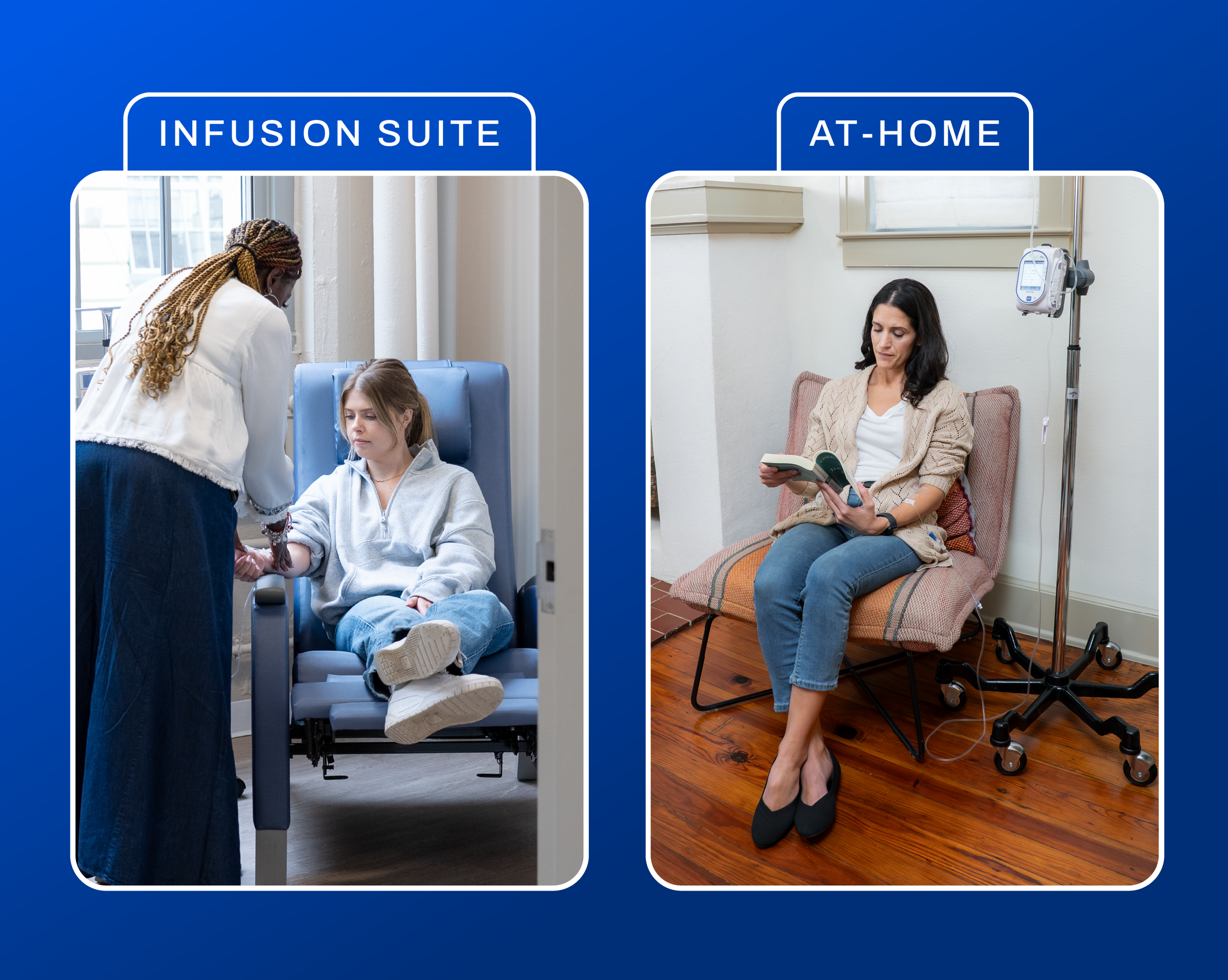
A patient’s infusion therapy care is seamlessly woven into their overall treatment plan in collaboration with their chronic care specialist. AOM administers infusions on the patient’s schedule in the comfort of their home or in one of our state-of-the-art ambulatory infusion suites.
Ig Therapy Plan of Care
Ig therapy requires careful evaluation, precise dosing, and ongoing monitoring. AOM works as an extension of the provider care team, supporting both therapy initiation and long-term management through a structured, collaborative care model.
Each patient’s care team includes specialty infusion pharmacists, nurse clinicians, and insurance case managers. Both the pharmacy and nursing teams bring advanced expertise, with many holding Immunoglobulin National Society (IgNS) credentials, IgCN® for nurses and IgCP® for pharmacists. Together, they review each patient’s diagnosis, treatment history, prior reactions, and product considerations to ensure therapy selection, dosing, and monitoring meet the highest standards of safety and quality.
AOM’s Clinical Care Navigators (CCNs) are registered nurses (RNs) who work alongside the patient’s care team to oversee all aspects of their care. CCNs conduct patient-specific risk assessments, monitor therapy response, and remain closely connected with patients between treatments.
This integrated approach, guided by the Immunoglobulin National Society (IgNS) Standards of Practice, helps reduce complications, prevent high-cost interventions, and promote predictable, cost-effective outcomes while maintaining continuity across sites of care (SOC).
Site-of-Care Considerations
Understanding the available infusion settings is an important part of selecting the right therapy provider. AOM offers flexible site-of-care options designed to meet both clinical requirements and patient preferences, including in-home infusions and state-of-the-art ambulatory infusion suites (AIS).
In-home infusions offer a safe and effective option for patients who may have difficulty traveling to appointments, have limited mobility, or prefer the convenience of receiving treatment right at home. Home-based treatment is cost-effective, convenient, and minimally intrusive, and can support adherence when therapy comes directly to the patient.
For patients who prefer or require treatment outside the home, our infusion suites provide a safe, private alternative to hospitals and inpatient care, offering a lower-cost, high-touch experience.
A study by America’s Health Insurance Plans (AHIP) shows patients can save as much as $7,000 when treated at an infusion center instead of a hospital, and about $1,400 when they go to an infusion center instead of their doctor’s office. On average, hospitals charge 108% more than infusion centers for the same medications.
Both in-home infusion and treatment at our infusion suites include the following benefits:
- Convenient scheduling and medication management
- Patients can maintain daily routines and resume work and lifestyle activities
- Reduced exposure to a broader range of patients and illnesses, decreasing the risk of infection, compared to hospitals or inpatient treatment
AOM’s Ig clinicians work closely with patients to ensure a smooth transition, assessing both the home environment and patient readiness. Key factors include the patient’s ability to manage therapy, access to essential utilities (running water, electricity, phone), proximity to emergency care, and verification of insurance coverage. Nurses provide guidance or supervision during treatment as needed, and Clinical Care Navigators follow up afterward to monitor patient progress, address questions, and coordinate the next infusion.
Commitment to Patient Education and Safety
Patient education is a critical component of successful Ig therapy. AOM clinicians ensure patients receive clear, practical guidance throughout treatment, including comprehensive medication education and safety instruction tailored to their prescribed therapy (IVIG or SCIG).
AOM patients receive comprehensive training on:
- Their prescribed immunoglobulin product, dosing schedule, and potential side effects
- Proper storage and handling of medication and supplies
- Preparation and administration techniques for SCIG or fSCIG, when applicable
- Infusion expectations and monitoring during IVIG therapy
- Use of infusion equipment, including pumps when required
- Recognition of an infusion-related allergic reaction and/or adverse event
- When and how to use emergency medications, such as an epinephrine auto-injector
- When to seek medical attention and how to contact their provider, Ig pharmacy, or nurse
This structured education approach supports adherence, promotes safety, and reinforces appropriate response protocols across both IVIG and SCIG therapies.
Collaborating with Providers to Advance Care
IVIG therapy is complex, and outcomes depend as much on the expertise of the infusion provider as on the therapy itself. Selecting a provider with experienced clinicians, nationally recognized standards, and coordinated care is critical to ensuring safe, effective, and patient-centered treatment. With decades of specialized expertise and a fully integrated care model, AOM works with providers to deliver reliable immunoglobulin therapy while reducing administrative burden and streamlining care coordination.
Learn more about how we support providers or refer your patient today.