
If you’ve started IVIG or SCIG therapy, you may have heard your AOM care team mention the importance of staying hydrated before and after your infusions. While it may seem simple, hydration plays an important role in supporting your comfort during treatment and recovery afterward.
This guide explains why hydration matters during immunoglobulin (Ig) therapy, how to recognize signs of dehydration, and practical ways to prepare before, during, and after infusion.
Why Hydration Matters for IVIG and SCIG Therapy
When you receive immunoglobulin therapy, your body is working hard to process and integrate the medication into your system. Proper hydration helps support circulation, infusion tolerance, and recovery.
How Hydration Helps During Infusion
Staying well-hydrated before and during your infusion can help:
- Reduce headaches and fatigue — two of the most common side effects patients experience after IVIG therapy
- Support vein health — especially important for IVIG patients, as proper hydration helps keep veins strong and accessible
- Help your body process the therapy more effectively — hydration aids in the distribution and utilization of the immunoglobulins you’re receiving
It is recommended that you increase your fluid intake before, during, and after infusion as a primary way to mitigate side effects.
How Much Water Should You Drink Before an Infusion?
The standard recommendation for daily hydration varies across individuals. It is commonly recommended to drink at least eight 8-ounce glasses of water per day—often called the “8×8” rule. However, for patients receiving Ig therapy, the Immunoglobulin National Society (IgNS), a leading Ig therapy education organization, recommends a higher amount based on your age and gender.
Additionally, IgNS recommends that when you’re preparing for and recovering from infusion therapy, you drink an additional 8 to 16 fluid ounces (one to two cups) the day before, the day of, and the day after your infusion, if you’re able to.
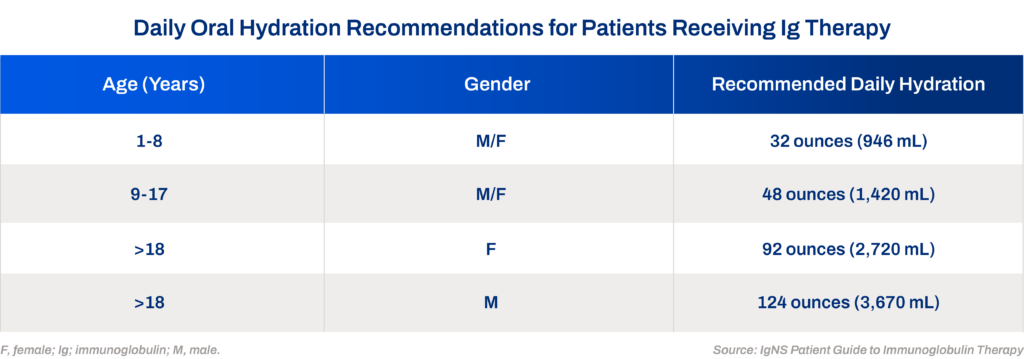
If you have kidney disease, heart conditions, or fluid restrictions, speak with your healthcare provider about a hydration plan appropriate for you.
Understanding Dehydration
Dehydration is a condition caused by the loss of too much fluid from the body, preventing proper function. It can occur when you are not drinking enough water or fluids.
Symptoms may include:
- Excessive thirst
- Dizziness or lightheadedness
- Dark yellow urine (healthy urine should be pale yellow or clear)
- Dry mouth or dry skin
- Fatigue beyond what’s typical for you after infusion
- Difficulty concentrating
Older adults can be at a higher risk of dehydration. If you or a loved one is an older adult managing infusion therapy, the best way to prevent dehydration is to drink more water throughout the day. Consider the following suggestions for support:
- Don’t wait until you feel thirsty to drink — make hydration a scheduled habit
- Keep fluids within easy reach at all times
- Monitor urine color as a simple check on hydration status
AOM’s clinical team is available 24 hours a day, 7 days a week. Don’t hesitate to call if something doesn’t feel right.
Preparing for Your Infusion: Hydration in the Days Before
Hydration begins before your appointment. Begin increasing your fluid intake a day or two before your scheduled infusion. Your goal is to arrive at your infusion appointment well-hydrated. Think of it like preparing your body to handle the work ahead.
The day before your infusion:
- Drink fluids consistently throughout the day
- Aim for at least 64 ounces of water unless otherwise directed by your provider
- Add an extra 8–16 ounces of fluid if recommended by your care team
- Spread fluids throughout the day instead of drinking large amounts at once
The day of your infusion:
- Continue drinking water and fluids throughout the day before your appointment
- Drink 8 to 16 ounces of fluid an hour or two before your infusion begins
- Limit excessive caffeine or alcohol, which may contribute to dehydration
Best Fluids to Prioritize
You have plenty of options when it comes to staying hydrated. Below are a few great choices, but if anything is contraindicated by your MD, then listen to their advice:
Liquid Choices:
- Water: always the best choice
- To add flavor, UCLA Health recommends adding fruits and herbs to your water. This adds flavor without adding sugar. You can try berries, citrus fruits (lemons, limes, or oranges), cucumbers, basil, and rosemary.
- You can also consider drinking unsweetened bubbly or sparkling water that comes in a variety of flavors.
- Herbal tea or caffeine-free tea: warm or iced, this is a great way to increase fluid intake if you need an alternative to plain water
- Coconut water: contains natural electrolytes and can be a refreshing option
Increase Your Intake Through Foods
You can also increase your water intake by consuming produce with high water content and other liquid-based foods:
- Cabbage
- Cantaloupe
- Celery
- Cucumbers
- Lettuce
- Strawberries
- Watermelon
- Low-sodium broths
- Soups and stews
Limit or avoid:
- High-caffeine beverages: coffee, black tea, energy drinks (especially on infusion day)
- Alcohol: alcohol is dehydrating, so it’s best to avoid or significantly limit it in the days around your infusion
- Sugary drinks: high-sugar beverages like soda or sweetened juices can actually increase dehydration
Staying Hydrated During Your Infusion
Infusion times vary depending on your therapy and dose. You’ll want to continue drinking fluids while you’re being treated.
- Bring a water bottle or beverage you can sip on throughout your appointment
- Ask your AOM nurse for refreshment options should you receive treatment at one of our infusion suites
- Sip gradually rather than drinking large amounts at once; small, steady sips are easier on your system
Listen to Your Body
Your AOM nurse will be checking on you throughout your infusion, monitoring how you’re feeling and your vital signs.
- Let your care team know if you’re feeling lightheaded, dizzy, or unusually fatigued — these can sometimes be signs of dehydration, and your nurse can help address this
- Report any new symptoms — headache, nausea, or chills — so your team can respond and adjust your treatment experience
Your AOM care team wants you to be as comfortable as possible. Please feel empowered to share anything that might help us support you better during your infusion.
Post-Treatment Care: Hydration and Rest
Hydrating doesn’t end once your infusion is over. Proper post-infusion hydration plays an important role in reducing side effects and helping your body recover.
We recommend continuing fluid intake and giving yourself time to rest if you need it, but you can return to your normal activities as you feel comfortable.
The day after your infusion:
- Continue prioritizing water, herbal tea, or other hydrating beverages
- Monitor for delayed symptoms
If you experience nausea or vomiting, neck stiffness, or a headache that lasts more than 24 hours, contact your AOM patient care team for further support.
Within 24 to 48 hours after your treatment, your Clinical Care Navigator will call to check in, see how you’re feeling, and answer any questions you might have.
Hydration Is Simple but Impactful
“We always want to remind patients about the importance of proper hydration before and after their infusion to prevent headaches and nausea,” says AOM clinical pharmacist Whitney Unterwagner.
Staying hydrated before, during, and after your IVIG or SCIG infusion is one of the simplest and most effective things you can do to support your health.
Most patients find that when they prioritize hydration, side effects are fewer and milder, they recover more quickly, and they feel more confident heading into their next infusion appointment. It’s a small habit with real, measurable benefits.
We’re Here For You
If you have questions about hydration, how much you should be drinking given your specific health situation, or any concerns about your infusion experience, your AOM care team is here.
Have questions about your infusion? Our AOM care team is available around the clock to provide guidance and support.
For more helpful information, visit our Resource Library for practical tips, therapy education, and resources to support you throughout your care.
For Providers: This resource is ideal to share with patients as part of your pre-infusion education. We invite you to share this article with your patients to reinforce the importance of hydration and help ensure they’re well-prepared for their infusion.
Sources:
UCLA Health — Hydration Hacks: How to Drink More Water Every Day
Ig Living Magazine — Navigating Your First IVIG Infusion
U.S. Department of Veterans Affairs — Preventing Dehydration in Older Adults
National Council on Aging, Inc. – How to Stay Hydrated for Better Health
AOM Infusion – Mindfulness Tips for Infusion Days: A Guide to Self-Care
AOM Infusion – Mindful Movement: A Guide to Exercise with a Chronic Condition