If you’ve been diagnosed with a neurological or neuromuscular condition, whether it’s myasthenia gravis (MG), chronic inflammatory demyelinating polyneuropathy (CIDP), multiple sclerosis (MS), or another neurological disorder, you may be wondering what treatment options exist and what comes next. Understanding your treatment options and what to expect can help you feel more informed and confident as you begin your care journey.
At AOM Infusion, we care for patients with neurological and neuromuscular conditions every day. Our team of exceptional nurses, clinical pharmacists, and patient advocates is here to walk alongside you, from your diagnosis through your first infusion, and every treatment after. This guide is designed to help you understand how immunoglobulin (Ig) therapy works for neurological and neuromuscular conditions and what to expect when AOM becomes part of your care team.
How Ig Therapy Helps Neurological and Neuromuscular Disorders
For patients with neurological and neuromuscular conditions, FDA-approved Ig replacement therapy can be a first-line approach to treatment. AOM Infusion specializes in delivering Ig therapy and offers multiple options to fit your diagnosis and lifestyle.
Ig therapy works by:
- Blocking the damaging antibodies that attack nerve and muscle tissue
- Modulating the immune system to reduce inflammation and autoimmune attack
- Coating damaged nerves to help them function better
- Reducing the frequency and severity of disease exacerbations
Patients can receive Ig treatment via intravenous immunoglobulin (IVIG) or subcutaneous immunoglobulin (SCIG).
What are IVIG and SCIG?
IVIG delivers a concentrated dose of immunoglobulins, antibodies derived from donor plasma, directly into the bloodstream. For neurological and neuromuscular patients, IVIG offers several advantages, including:
- Rapid delivery of immunoglobulins directly into the bloodstream
- Less frequent dosing, with infusions typically administered every three to four weeks
- The ability to deliver larger doses in a single treatment session, when clinically appropriate
- Administration under the supervision of experienced infusion clinicians who can monitor response and adjust care as needed
SCIG delivers the same therapy through a small needle placed under the skin. For many neurological patients, SCIG offers particular advantages:
- More stable, steady antibody levels throughout the month
- For patients with poor venous access, SCIG is often a more practical choice
- For patients experiencing breakthrough symptoms, worsening disease symptoms in the days before their next IVIG infusion, SCIQ’s weekly dosing provides more consistent antibody coverage and can effectively prevent these symptom flares
Your physician and AOM care team will work with you to determine whether IVIG or SCIG is the best fit for your specific condition and lifestyle.
Understanding Neurological and Neuromuscular Disorders
Neurological and neuromuscular disorders are often discussed together because they can overlap, but there are differences:
- Neurological disorders affect the central and peripheral nervous system. These conditions disrupt the signals that control movement, sensation, and cognition.
- Neuromuscular disorders specifically affect the nerves that control muscles or the muscles themselves. They impact the connection between your nervous system and your muscles, disrupting the messages that allow movement.
In practice, many conditions that affect nerves also affect muscles, which is why treatments often share similarities.
Common Neurological and Neuromuscular Disorders We Treat
AOM Infusion has deep clinical experience treating a range of neurological and neuromuscular conditions. Some of the most common include:
Myasthenia Gravis (MG)
Myasthenia Gravis is a condition in which antibodies attack the connection between nerves and muscles, causing muscle weakness and fatigue. Symptoms may include drooping eyelids, difficulty speaking or swallowing, and generalized muscle weakness that worsens with activity. Ig therapy can help reduce the impact of harmful antibodies and improve muscle strength, function, and symptom control in many patients.
Chronic Inflammatory Demyelinating Polyneuropathy (CIDP)
An immune condition that damages the protective coating (myelin) around nerve fibers, causing weakness and weakened reflexes in the legs and arms. Symptoms develop over weeks to months and can range from mild tingling to severe weakness. CIDP is one of AOM’s most frequently treated conditions, and IVIG is the gold standard for managing this disease.
Guillain-Barré Syndrome (GBS)
An acute autoimmune condition in which the immune system attacks nerve cells, causing muscle weakness and sometimes temporary paralysis. GBS is a medical emergency requiring immediate hospitalization, but Ig therapy plays a critical role in recovery and preventing progression.
Multiple Sclerosis (MS)
Multiple Sclerosis is an autoimmune condition in which the immune system damages the protective coating of nerve fibers, disrupting communication between the brain and the rest of the body. Symptoms vary widely and can include fatigue, difficulty walking, numbness, and cognitive changes. IVIG therapy is particularly helpful for patients with relapsing-remitting MS.
Dysimmune Neuropathies
A group of conditions, which includes Multifocal Motor Neuropathy, characterized by immune system damage to peripheral nerves, causing weakness, numbness, and pain in the arms and legs. Ig therapy can help slow immune-mediated nerve damage and improve strength and function for many patients.
Autoimmune Muscle Conditions
The inflammatory conditions Dermatomyositis and Polymyositis affect the skin and muscles, respectively. These conditions respond well to Ig therapy in combination with other immunosuppressive treatments.
Stiff Person Syndrome (SPS)
A rare autoimmune neurological disorder characterized by progressive rigidity and stiffness in the trunk and limbs, often accompanied by severe muscle spasms. Ig therapy, particularly IVIG, performs effectively and is considered a safe and effective treatment for SPS.
While each of these conditions is unique, many respond well to Ig therapy, which works by modulating the immune system and reducing the damaging antibodies that attack nerve and muscle tissue.
AOM has decades of experience in treating multiple chronic conditions, including neurological and neuromuscular disorders. We create specialized treatment plans with our advanced therapies that are specifically catered to your needs.
Common Misconceptions About Ig Therapy for Neurological and Neuromuscular Disorders
Misconception: “Ig therapy is a blood transfusion.”
One important thing to know is that Ig therapy is not a blood transfusion. Immunoglobulins are derived from donor plasma, a yellow-white liquid separated from blood. Plasma is tested and then carefully processed according to the highest safety standards. The manufacturing process includes rigorous screening, testing, and inactivation protocols, making Ig therapy one of the safest immunological treatments available. At AOM, we have been safely treating patients with chronic conditions for over 30 years.
Misconception: “If I’m feeling better, it’s okay to delay or skip a treatment.”
For conditions like MG and CIDP, staying on your treatment schedule is critical. Consistent IVIG therapy keeps your antibody levels stable and your condition controlled. Missing or delaying infusions can result in worsening symptoms and increased risk of exacerbation.
Your dosing schedule isn’t arbitrary; with AOM, it’s carefully calculated based on your condition and response to therapy. Our job is to make staying on schedule as easy as possible.
Side Effects of Ig Therapy in Treating Neurological and Neuromuscular Conditions
Most patients tolerate Ig therapy well, particularly when they’re properly prepared and informed about what to watch for.
Common, mild side effects include:
- Headache (the most common side effect)
- Fatigue or malaise
- Mild fever or chills
- Flushing or temporary rash
- Muscle or joint aches
- Nausea
For most patients, these side effects are mild and temporary, often resolving within 24 hours. Pre-medications, slower infusion rates, and good hydration can help minimize these reactions.
Rare but serious side effects can include severe allergic reactions, blood clots, or kidney complications. As an Ig Distinction center of excellence provider, AOM’s nurses are highly trained and monitor you closely to respond immediately to any concerns.
Receiving IG Therapy Care for Neurological and Neuromuscular Conditions from AOM
Infusions at Home
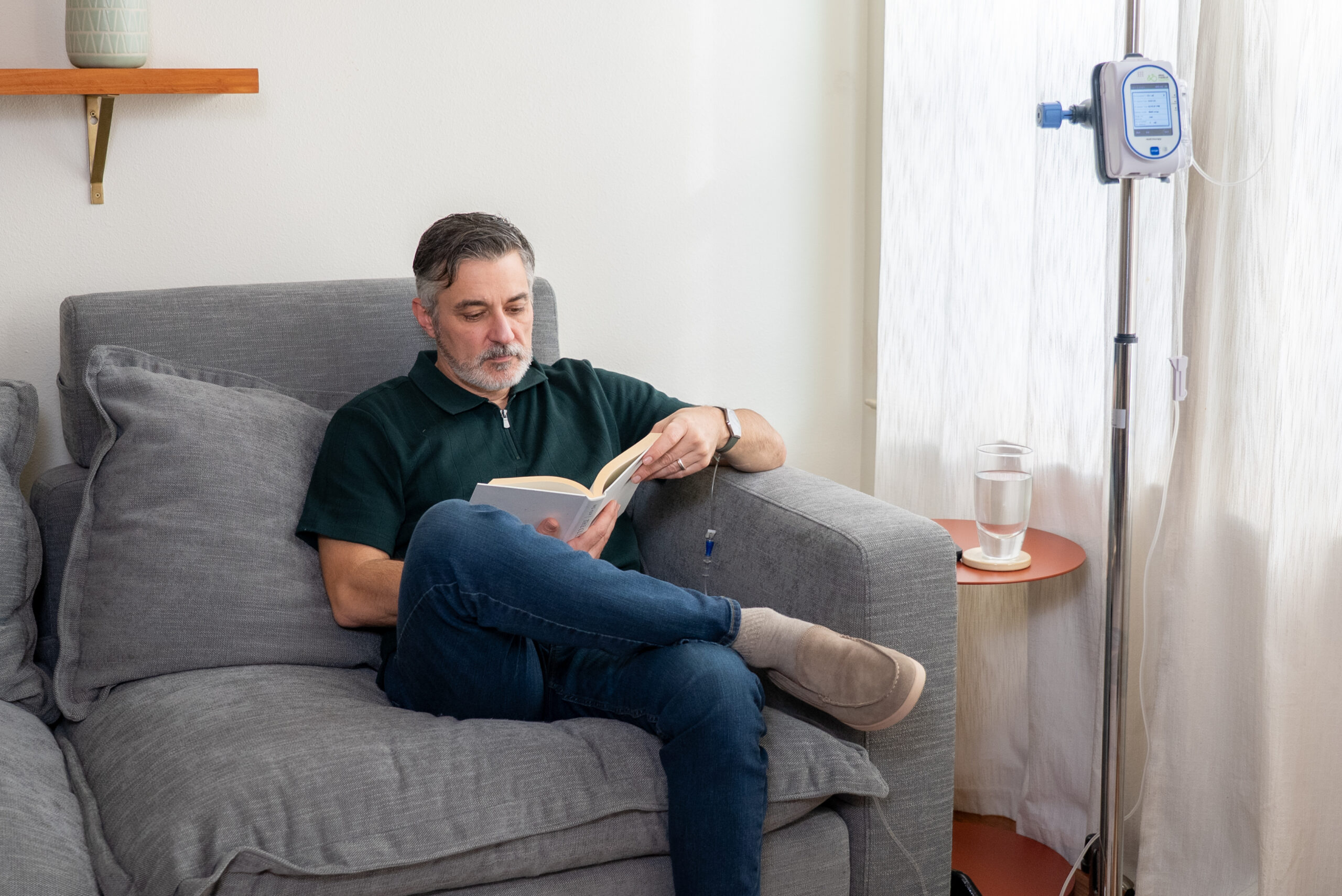
For many patients with neurological conditions, home infusion offers comfort and flexibility. An AOM-trained registered nurse (RN) comes to your home to administer your infusion in a familiar, comfortable environment. You can be surrounded by family, in your own space, without the stress of traveling to a hospital.
“Home infusion also offers practical advantages: you’ll spend significantly less time than you would at a facility, often saving one to two hours, because the infusion is prepared at your home once your nurse arrives.”
– Misha Sturns, senior director of business development at AOM.
Combined with no travel time, many patients find they save considerable money compared to facility-based infusions and hospitals. Additionally, AOM can work around your schedule, whether that’s early morning before work, lunchtime, or weekends, giving you control over how treatment fits into your life.
“AOM is the first place I refer patients for home infusion,” says a neurologist from New York. “The feedback I receive from patients is that they also love AOM. Everything is seamless, and I never have issues.”
Home infusion also offers consistency; you often work with the same nurse, building a relationship and continuity of care that patients find deeply comforting.
Infusion Suites (Ambulatory Infusion Centers)
For patients who prefer to receive treatment outside of the home, AOM operates state-of-the-art infusion suites. Currently, we have three suite locations in Arlington, TX and Brooklyn, NY, with additional suites available soon. The suites are thoughtfully designed, offering comfortable, private treatment rooms that are easily accessible and equipped with amenities like free Wifi and snacks.
For additional support, AOM provides transportation support services for qualifying patients.
Understanding your location care options can help you make the best decision for your treatment journey.
A Collaborative Approach to Your Ig Therapy Care for Neurological and Neuromuscular Conditions
Managing a neurological or neuromuscular condition well requires everyone working together. At AOM Infusion, we function as an extension of your neurologist’s team.
Your AOM nurse and pharmacist maintain close communication with your physician, providing regular updates on your treatment progress and how you’re responding to therapy. You will also be assigned a Clinical Care Navigator (CCN), a dedicated specialist who manages all aspects of your care, serving as a consistent, trusted guide throughout the care journey. Our Patient Advocates are also available to support you with financial and resource-related matters.
“I have been fortunate to work with AOM for over 10 years in the management and treatment of my patients with dysimmune neuropathies, myasthenia gravis, and multiple sclerosis,” says a longtime referring neurologist. “AOM’s staff has been consistently reliable and has provided my patients with excellent and attentive care in a timely manner. By providing prompt and excellent infusion services, AOM has, on numerous occasions, prevented having to hospitalize my patients during exacerbations of myasthenia gravis and multiple sclerosis.”
Supporting Long-Term Health and Quality of Life for Patients with Neurological and Neuromuscular Disorders
Managing a neurological or neuromuscular disorder is a long-term commitment, and at AOM, we’re committed to supporting not just your medical care, but your overall quality of life.
“AOM has serviced hundreds of patients over the past 11 years and is still delivering the same unsurpassed quality of care since day one,” says a neurologist who regularly refers to AOM. “AOM’s communication with my patients and my staff is always exceptional. We continue to be impressed by the knowledge of the clinicians at AOM, in addition to their being eager and willing to help whenever needed with any request we put before them. A comment from a recent patient could serve as the motto of this fine organization: ‘Everyone deserves the care that AOM provides.’”
A patient at a myasthenia gravis patient support walk approached Sturns. “If you had seen me a month ago,” he explained, “I wouldn’t have been able to walk to this table. But it’s important for me to walk to this table because I want to tell you thank you.”
A month earlier, this young man hadn’t been able to walk and required a cane to support him. But with consistent IVIG therapy from AOM, he’d recovered enough to walk freely and make the journey to say thank you.
That’s the impact we work toward every single day.
We’re Here for You
Whether you’re newly diagnosed and exploring treatment options or you’ve been managing a neurological condition and want to learn more about Ig therapy, the AOM Infusion Care team is here to help.
For Patients and Caregivers
Whether you’re interested in exploring treatment options or learning about site of care options, feel free to give us a call. We’re always available to speak with you.
Want to explore additional resources? Visit our Patient Resource Library for articles on managing your condition, understanding treatment, and supporting your overall well-being.
For Healthcare Providers
Referring a patient with a neurological or neuromuscular disorder to AOM is straightforward and seamless. Our specialized team has deep expertise in these conditions and works collaboratively with you every step of the way.
Fill out an online referral form or call 800-528-9860 to get started.